Table of Contents
- What is aphasia?
- What aphasia is not
- Common causes of aphasia
- How aphasia is diagnosed
- Types of aphasia
- Broca’s aphasia (expressive, nonfluent)
- Wernicke’s aphasia (receptive, fluent)
- Global aphasia
- Anomic aphasia
- Conduction aphasia
- Transcortical motor aphasia
- Transcortical sensory aphasia
- Mixed transcortical aphasia
- Primary progressive aphasia (PPA)
- Treatment and recovery
- Impairment-based therapies
- Functional approaches and AAC
- Telerehab in Canada
- Living with aphasia: daily communication
- Practical communication tips for families
- Examples of supported conversation
- Working with a speech-language pathologist in Canada
- When to seek help—and what to expect
- Frequently asked questions
- Key takeaways
If you or someone you care about has suddenly found it hard to find words, follow conversations, or read and write after a stroke or brain injury, you’re not alone. This guide explains what aphasia is and the different types of aphasia in clear, practical terms—along with what recovery can look like, how speech-language pathologists (SLPs) help, and everyday strategies that make communication easier.
What is aphasia?
Aphasia is a language disorder caused by damage to areas of the brain that support understanding and using language. Most often, aphasia happens after a stroke, but it can also follow a traumatic brain injury, a brain tumour, infection, or a progressive neurological condition. Aphasia can affect:
- Talking: finding the right words, putting sentences together, or pronouncing words correctly
- Understanding speech: following conversations or complex sentences
- Reading and writing: from single words to longer texts
- Numbers and functional tasks: like telling time or managing money, if language supports are needed
Aphasia does not mean someone has lost intelligence or the ability to think. It means the pathways for language are disrupted, which can be frustrating for everyone involved. With the right support, people with aphasia can continue to learn, socialize, and make decisions about their lives.
What aphasia is not
Aphasia is different from speech disorders such as apraxia of speech (a motor planning problem) or dysarthria (a muscle weakness problem), though these can co-occur. Aphasia is also not a cognitive disorder, although attention and memory challenges after a brain injury can complicate communication. Understanding this distinction helps families set realistic expectations and choose the right therapies.
Common causes of aphasia
Stroke (especially in the left hemisphere) is the leading cause of sudden-onset aphasia. Traumatic brain injury, brain tumours, infections, and certain forms of dementia can also cause aphasia. In a growing, aging population, language and communication disorders affect many Canadian families; national sources such as Statistics Canada share demographic trends that help contextualize the demand for rehabilitation services. For information on navigating health systems and safety, Health Canada provides resources for Canadians.
How aphasia is diagnosed
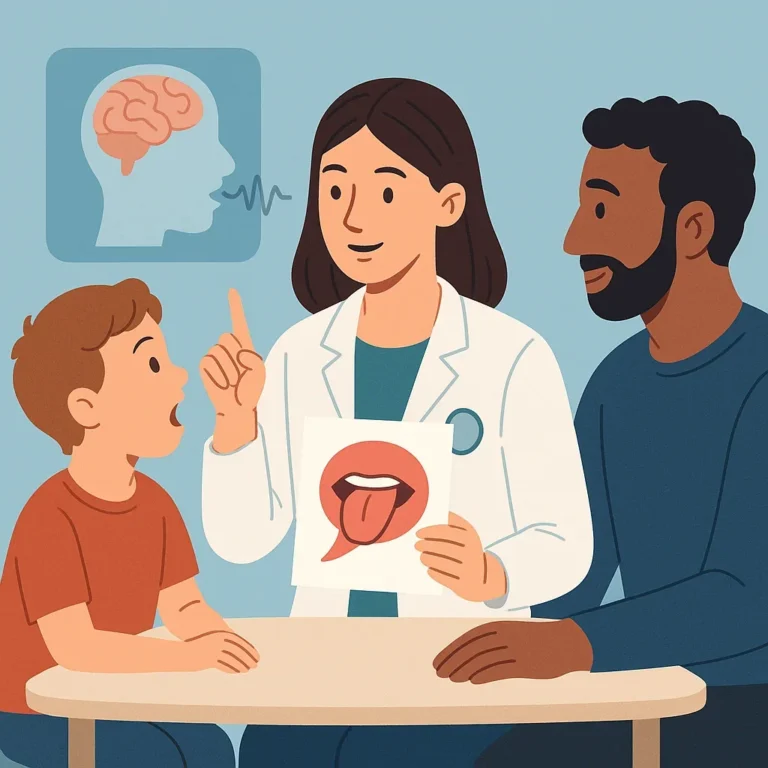
Aphasia is diagnosed by a speech-language pathologist through a combination of interviews, standardized tests, and functional tasks. Assessment explores comprehension, speaking, naming, repetition, reading, and writing. It also looks at how communication works in real life—ordering a coffee, using a calendar, or texting family. Because fatigue, vision, hearing, and motor changes influence results, assessments are tailored to each person’s needs.
Types of aphasia
Clinicians often describe aphasia by patterns of strengths and challenges. Broadly, some aphasias are called “nonfluent” (short, effortful speech) and others “fluent” (longer but sometimes less meaningful speech). Below are common types and what they might look like day to day.
Broca’s aphasia (expressive, nonfluent)
People with Broca’s aphasia usually understand a lot more than they can say. Speech may be short, effortful, and telegraphic, like “Want… coffee… black.” Grammar is often reduced, and writing is similarly affected. Reading comprehension for short, concrete sentences may be better than for complex grammar. Frustration is common because the person knows what they want to say.
Wernicke’s aphasia (receptive, fluent)
In Wernicke’s aphasia, sentences are usually longer and sound fluent, but words can be incorrect or made up (“neologisms”). Understanding speech is significantly affected, especially in noisy settings. People may not recognize their errors or may misinterpret others’ messages, which can make conversation confusing.
Global aphasia
Global aphasia involves severe difficulties in both understanding and expression. It often occurs right after a large stroke. Over time, many people with global aphasia regain some skills with intensive therapy and support. Nonverbal communication—gestures, facial expressions, and drawing—plays a central role.
Anomic aphasia
Anomic aphasia is primarily a word-finding problem. Conversation can sound relatively fluent and grammatical, but key nouns and verbs are hard to retrieve, leading to pauses, circumlocutions (“the thing you cut with”), or use of vague words (“that stuff”). Reading and writing may be less affected, though finding specific words remains a challenge.
Conduction aphasia
Conduction aphasia features strong understanding and relatively fluent speech, but with frequent sound-based errors and difficulty repeating phrases accurately. People often notice and try to correct their errors, leading to multiple attempts at a word. This can be particularly frustrating on the phone or when repeating information.
Transcortical motor aphasia
Similar to Broca’s, transcortical motor aphasia presents with reduced, effortful speech—yet repetition is relatively strong. People may say more when given cues or during structured tasks than in spontaneous conversation.
Transcortical sensory aphasia
Similar to Wernicke’s, language is fluent but may be empty or filled with errors. Unlike Wernicke’s, repetition is relatively preserved. People can repeat long phrases yet still struggle with comprehension.
Mixed transcortical aphasia
Both expression and comprehension are limited, but repetition can be strikingly intact—even for long sentences or songs. This unique pattern can be leveraged in therapy.
Primary progressive aphasia (PPA)
PPA is a group of neurodegenerative conditions in which language gradually declines over years. It is different from sudden-onset aphasia after stroke. Variants include:
- Nonfluent/agrammatic variant (nfvPPA): Slow, effortful speech with grammar errors; later, speech-motor planning may be affected.
- Semantic variant (svPPA): Loss of word and object meaning; fluent speech but with reduced understanding of specific words and names.
- Logopenic variant (lvPPA): Word-finding and sentence repetition difficulties; speech may be slow with pauses, but grammar is relatively preserved.
Management focuses on maintaining communication, educating partners, and adapting tools as needs change.
Treatment and recovery
Recovery from aphasia varies widely and depends on factors like cause, size and location of the brain injury, overall health, and how soon therapy begins. Many people make significant progress, especially within the first months post-stroke, and can continue to improve with ongoing, targeted practice. Evidence-based treatment usually blends impairment-focused exercises with functional, everyday communication practice.
Impairment-based therapies
These approaches aim to strengthen underlying language processes. Examples include:
- Semantic Feature Analysis (SFA): Boosts word-finding by exploring meaning features (category, function, location).
- Phonological Component Analysis (PCA): Uses sound-based cues (first sound, syllables) to prompt retrieval.
- Verb Network Strengthening Treatment (VNeST): Builds sentence-level expression through verb-centred practice.
- Melodic Intonation Therapy (MIT): Leverages melody and rhythm to improve phrase production in nonfluent aphasia.
- Constraint-Induced Language Therapy (CILT): Encourages verbal communication by limiting nonverbal compensations in structured tasks.
- Copy and Recall Treatment (CART): Improves written naming through repeated copy–recall cycles.
These methods are adapted to personal goals—like being able to say family names, give directions, or leave a voicemail.
Functional approaches and AAC
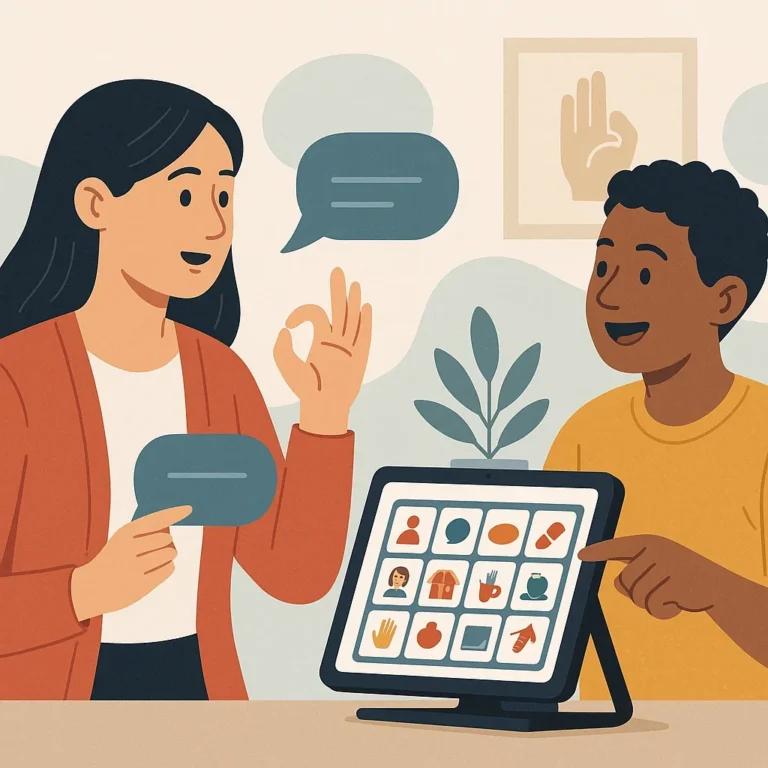
Functional therapy prioritizes participation in real-life activities—ordering food, managing appointments, or socializing. Communication Partner Training teaches families and caregivers how to support conversation effectively. Augmentative and Alternative Communication (AAC) tools—from simple notebooks and photo cards to speech-generating apps—can expand communication now and long term.
For a deeper dive into options, see our resource on augmentative and alternative communication, including low-tech and high-tech supports, selection tips, and real-world examples.
Telerehab in Canada
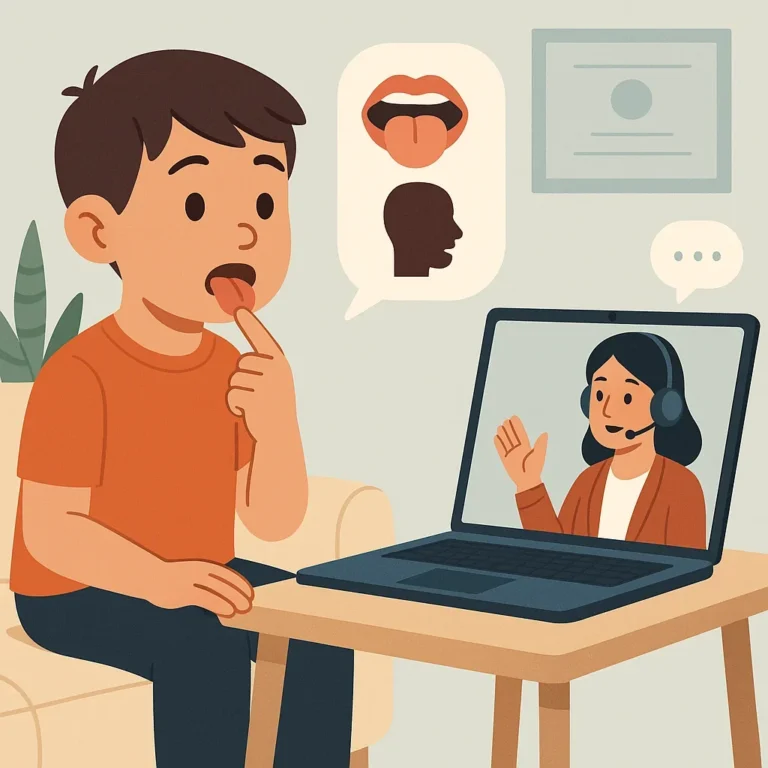
Many Canadians access aphasia therapy through secure video platforms. Research shows virtual care can be effective for language treatment and for training communication partners at home. Learn more in our evidence-based guide to virtual speech therapy and our overview of online speech therapy in Canada.
Living with aphasia: daily communication
Life doesn’t pause for aphasia. The goal is to keep conversations flowing and decisions shared, even when words are hard to find. The strategies below support dignity, autonomy, and connection.
Practical communication tips for families
- Get attention first: Say the person’s name, sit face to face, reduce background noise.
- Use short, clear sentences: One idea at a time. Pause to check understanding.
- Confirm key words: Write or type the topic, names, dates, or numbers as you talk.
- Offer choices: “Tea or coffee?” Choices are easier than open-ended questions.
- Encourage all modes: Gestures, drawing, photos, pointing, and texting all count as communication.
- Give time: Wait after asking a question. Resist finishing sentences unless asked.
- Repair breakdowns: If communication stalls, restate, simplify, or switch to writing or pictures.
- Preserve adult roles: Involve the person in decisions and routines. Check yes/no questions carefully.
Examples of supported conversation
Example 1 (planning a visit):
- Partner: “Visit on Tuesday or Wednesday?” (shows calendar, writes the two options)
- Person with aphasia: Points to Wednesday, says “Wed… after… lunch.”
- Partner: “Wednesday after lunch—2 p.m.?” (writes 2:00)
- Person with aphasia: Nods, thumbs-up.
Example 2 (telling a story):
- Partner: “Topic is gardening.” (writes ‘garden’ and draws a flower)
- Person with aphasia: Says “tomato… big… first time.”
- Partner: “You grew a big tomato for the first time?” (writes words; shows photo album)
- Person with aphasia: Smiles, points to photo, adds “sauce!”
These strategies align with widely used Supported Conversation for Adults with Aphasia (SCA) principles: acknowledge competence and reveal competence by adjusting how information is shared.
Working with a speech-language pathologist in Canada
SLPs assess language strengths and challenges, set meaningful goals, and deliver therapy that fits your life. They also coach families, coordinate with occupational and physiotherapists, and recommend community supports. For a broader overview of what a communication therapist does and how they help Canadians of all ages, explore our guide.
Whether you access care through hospitals, community agencies, or private clinics, therapy plans should be individualized, evidence-informed, and functional. Learn how services are organized and what to expect in our overview of speech therapy in Canada.
When to seek help—and what to expect
Seek urgent medical care when language changes appear suddenly (potential signs of stroke). After medical stabilization, early speech-language assessment is recommended. Expect your SLP to set clear goals, explain treatment rationales, and monitor progress. Recovery is rarely linear; plateaus happen, and gains may appear first in structured tasks before generalizing to conversation. With consistent practice and partner support, many people see meaningful improvements in participation and confidence.
For general information on navigating Canadian healthcare and safety, visit Health Canada. Population-level trends and data resources are available through Statistics Canada.
Frequently asked questions
Is aphasia the same as dementia?
No. Aphasia after stroke is a language disorder due to a focal brain injury, not a global memory disorder. However, primary progressive aphasia is a type of neurodegenerative condition where language declines over time. An SLP can help distinguish patterns and guide management.
Can bilingual people have aphasia in one language only?
Bilingual individuals often experience changes across languages, but patterns vary. Recovery can transfer between languages. Assessment and therapy should consider language history, daily use, and goals in each language.
How long does recovery take?
Some recovery occurs naturally as swelling reduces and the brain heals, especially in the first weeks and months. Therapy can support progress for months or years by building skills and compensations that matter to daily life.
Is technology helpful?
Yes. From simple phone photo albums to speech-generating apps and text-to-speech, technology can support communication. An SLP can recommend tools and train partners so devices fit real-world needs.
What if progress feels slow?
It’s normal to have faster and slower periods. Measuring what matters—more successful conversations, more independence in tasks, more joy in social activities—can highlight gains that standardized tests may miss.
Key takeaways
- Aphasia is a language disorder caused by brain changes; intelligence and personality remain.
- Types include Broca’s, Wernicke’s, global, anomic, conduction, transcortical variants, and primary progressive aphasia.
- Effective care blends structured language therapy with functional, real-life communication and partner training.
- Supports like AAC, community groups, and virtual care can expand access and participation across Canada.
- Progress is personal. With informed strategies and patient teamwork, communication can improve and quality of life can grow.